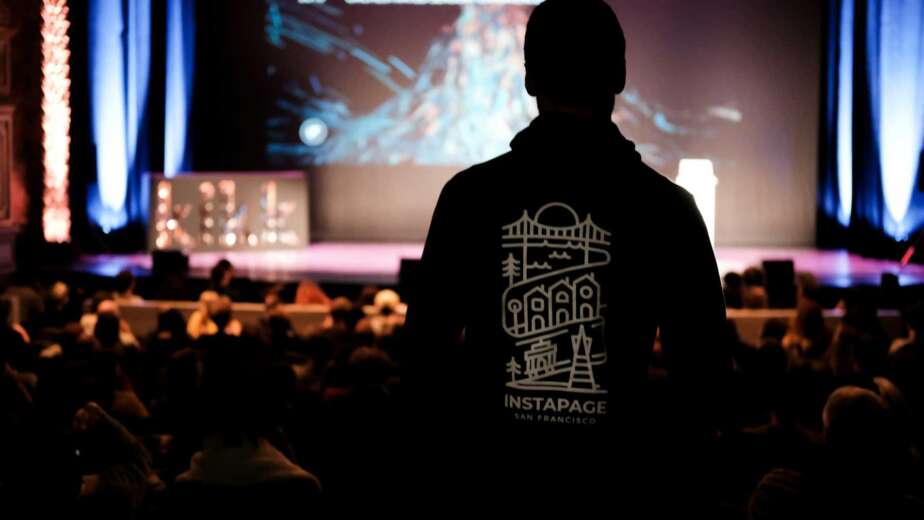
Picture this. You walk into a room. Nobody has heard your name yet. Nobody knows what you do, what you’re good at, or what you’re about to say. But somehow, in the time it takes to blink, they’ve already formed an opinion about you.
That’s not rude. It’s not shallow, either — not really. It’s just how the human brain is built. And once you understand why it happens, you can use it, instead of being surprised by it.
This is especially true for anyone building a brand, running a small team, or showing up at an event to represent a company. What your team wears in that first moment does a lot of the talking before anyone opens their mouth.
Your brain has two speeds
Nobel Prize-winning psychologist Daniel Kahneman spent decades studying how people think and make decisions. In his book Thinking, Fast and Slow (Kahneman, 2011), he describes two systems running in our minds.
One system is fast. It works without effort, without asking permission, and often without you noticing it at all. Kahneman calls this System 1. It’s the part of you that flinches at a loud noise, finishes the sentence “bread and ___,” or decides in a heartbeat whether a stranger looks friendly.
The other system is slow. It’s careful, it checks facts, it does math, it weighs pros and cons. Kahneman calls this System 2. It’s the part of you that reads a contract twice before signing it.
Here’s the problem: System 2 is lazy. It only steps in when it has to. Most of the time, System 1 is running the show — and System 1 loves shortcuts.
The first number sticks, and so does the first look
One of the shortcuts System 1 relies on is called anchoring. Kahneman and his research partner Amos Tversky first described it in their landmark 1974 paper in the journal Science (Tversky & Kahneman, 1974). They found that when people estimate an unknown value, the very first number they see silently shapes their final guess — even when that number has nothing to do with the real answer.
The same thing happens with people, not just numbers. The first thing you notice about someone becomes the “anchor” for everything you think about them afterward. Psychologist Solomon Asch showed this back in 1946. He gave two groups of people the exact same list of traits about a person — smart, hardworking, and so on — but changed the order. The group that heard the positive traits first rated the person far more favorably overall, even though both groups read the identical words (Asch, 1946). The order changed everything. This is known as the primacy effect: what comes first weighs more than what comes after.
And how fast does this “first thing” register? Faster than you’d think. A well-known study by Willis and Todorov (2006), published in Psychological Science, found that people form judgments about traits like trustworthiness after seeing a face for just one-tenth of a second. One-tenth of a second is barely enough time to read this sentence out loud. It’s nowhere near enough time to think.
Your outfit is part of that first tenth of a second
Before a person hears your voice, reads your title, or learns anything about your work, they see what you’re wearing. The cut, the fit, the color, the level of care — all of it gets folded into that instant, thoughtless judgment System 1 makes.
This isn’t a guess. Researchers Silvia Bellezza, Francesca Gino, and Anat Keinan studied how clothing choices shape the way we judge a stranger’s status and skill. Their 2014 study in the Journal of Consumer Research found that people who dressed slightly outside the expected norm — like sneakers in a boardroom — were sometimes rated as more competent, but only when the observer sensed the choice was confident and deliberate, not careless (Bellezza, Gino & Keinan, 2014). In other words, the same choice can read as “this person knows exactly who they are” or “this person didn’t think it through” — depending entirely on the setting.
That’s the part that matters most: it’s not about wearing something expensive or safe. It’s about wearing something that fits the moment. A hoodie can say “relaxed and creative” at a startup meetup and “not ready for this” at a client pitch. A neat, tailored blazer can say “prepared” in a boardroom and “trying too hard” at a casual team lunch. The clothes don’t change — the context does, and your brain reads both at once, instantly.
There’s an interesting twist here, too. Clothing doesn’t just change how others see you — it can change how you see yourself. Researchers Hajo Adam and Adam Galinsky ran an experiment where people wearing a lab coat performed noticeably better on focus-related tasks than people wearing the exact same coat but told it was a painter’s smock. They called this effect “enclothed cognition” — the clothes we wear can quietly shift our own mindset, not just other people’s (Adam & Galinsky, 2012). So the outfit is working in two directions at once: shaping the room’s opinion of you, and shaping your own state of mind before you even speak.
The opinion that refuses to fully update
Here’s the part that surprises people. Even after someone gets to know you — even after they see you’re skilled, kind, or exactly right for the job — that early snap judgment doesn’t fully disappear. It fades a little, but it leaves a trace. Psychologists call this an anchoring residue: your slow, careful System 2 can update the opinion, but it rarely erases the starting point completely.
This is why the outfit in the room during a first client call, a first vendor meeting, or a first day representing your company at an event carries more weight than it seems to in the moment. It quietly sets the anchor that every later interaction gets measured against, whether anyone realizes it or not.
What this means if you’re building something
If you run a small brand, manage a team, or organize a booth at a trade show, this research isn’t just interesting trivia — it’s a planning tool.
Every piece of clothing your team wears in front of a client, a partner, or an audience is quietly doing some of your brand’s talking. A consistent, well-fitted, on-brand look at a conference tells visitors “this team has it together” before your product demo even starts. A mismatched, thrown-together look can plant a small doubt that your best pitch will later have to work hard to erase.
This is exactly why so many growing brands — startups getting ready for a launch event, companies outfitting a team for a conference, service businesses that want their staff to look like one unified team — start paying closer attention to what everyone is wearing, not as an afterthought, but as part of the plan.
And here’s the good news: you don’t need thousands of units or months of waiting to get this right. Small, well-made batches — even runs as low as 100 pieces — are enough to give a team, an event crew, or a new product line a consistent, intentional look. That’s the whole idea behind low-minimum custom apparel production: you get to control the anchor, without the waste or the wait of a huge order.
The short version
People can’t help forming an opinion about you before they’ve had a real chance to think. It happens too fast for System 2 to catch. What you wear, how it fits, and whether it matches the moment all feed directly into that instant read — and that first read keeps quietly influencing things long after the meeting ends. You can’t switch this reflex off in other people. But you can decide what it’s reacting to.
Quick questions people ask about this
Why do people judge me by my clothes before they even talk to me? Because the brain’s fast thinking system (System 1) forms snap judgments from visual cues in a fraction of a second, long before the slower, more careful thinking system (System 2) gets involved. Clothing is one of the first visual cues it grabs onto.
Can a first impression from clothing really change once someone knows me better? It can soften, but research on anchoring suggests it rarely disappears completely. The first impression becomes a starting point that later information adjusts, rather than fully replaces.
Does wearing something unexpected make me look more confident or less professional? Research on nonconformity in dress (Bellezza, Gino & Keinan, 2014) found it can go either way — it depends on whether the choice looks deliberate and fits the setting, or looks careless and out of place.
Does what I wear actually affect my own performance, not just how others see me? Yes. Studies on “enclothed cognition” (Adam & Galinsky, 2012) found that specific clothing can shift the wearer’s own focus and mindset, separate from any effect on outside observers.
What’s a practical way to use this for a small team or brand? Keep the look consistent and matched to the setting: the same fit and quality across every team member at an event, in colors and styles that match what the audience expects to see. Small custom batches make this easy to do without overordering.
Sources
- Asch, S. E. (1946). Forming impressions of personality. Journal of Abnormal and Social Psychology, 41(3), 258–290.
- Adam, H., & Galinsky, A. D. (2012). Enclothed cognition. Journal of Experimental Social Psychology, 48(4), 918–925.
- Bellezza, S., Gino, F., & Keinan, A. (2014). The red sneakers effect: Inferring status and competence from signals of nonconformity. Journal of Consumer Research, 41(1), 35–54.
- Kahneman, D. (2011). Thinking, Fast and Slow. Farrar, Straus and Giroux.
- Tversky, A., & Kahneman, D. (1974). Judgment under uncertainty: Heuristics and biases. Science, 185(4157), 1124–1131.
- Willis, J., & Todorov, A. (2006). First impressions: Making up your mind after a 100-ms exposure to a face. Psychological Science, 17(7), 592–598.